
Vineyard Architecture: Why the Canopy Is Not a Matter of Aesthetics

Why can two neighboring vineyards, with the same variety, the same rootstock and the same water management, reach harvest with completely different ripening, one with developed color and tannin, the other with green berries even after the same number of days of sun exposure? The answer is not underground. It is in the plant's canopy.

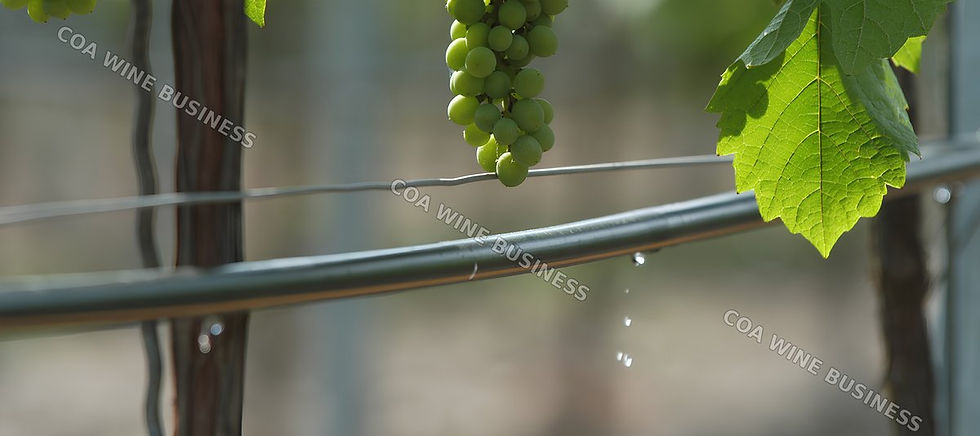
A vineyard with a well-structured canopy and row layout: the architecture this chapter discusses.
This is the third chapter of Block II of our COA Insights series, Building Quality. After covering nutrition in Chapter 5 and water in Chapter 6, we now dive into the canopy: the part of the vineyard that decides, every day of the season, how much light, heat and ventilation each cluster receives.
The canopy is not the vineyard's visual frame, it is a control system. In the terroir model of researcher Claudio Pastenes, professor at the University of Chile, a reference in plant stress physiology and viticulture, which we use as the basis throughout this series, agronomic management, pruning, training, leaf removal, is the Human Factor: the element that expresses, or wastes, the potential built by the decisions already covered in the previous chapters of this series. That is why vineyard architecture determines, cluster by cluster, four things: light, temperature, health and ripening. Let's look at each one below.
1. Sun Exposure and Photosynthesis (Light)
Leaf removal in the fruiting zone, and row orientation already defined at planting (Chapter 4), determine how much light reaches the cluster. That light sustains photosynthesis and, with it, the synthesis of phenolic compounds responsible for color and tannin. An overly closed canopy hides the cluster from the light the plant needs to ripen well.
2. Berry Temperature (Temperature)
The canopy works as a thermal regulator for the berry. Excessive direct sun exposure causes sunburn and acid loss, excessive shade delays ripening and keeps the berry too cold. Management seeks the balance between protection and exposure, not one extreme or the other, and that balance changes with each plot's microclimate.
3. Health and Microclimate (Health)
Leaf density controls humidity and ventilation in the fruiting zone. An overly dense canopy retains humidity, reduces air circulation and increases pressure from fungal diseases such as botrytis and powdery mildew. Shoot topping and canopy management, done at the right time, are active health tools, not just visual organization of the plant.
4. Vegetative-Reproductive Balance and Ripening (Ripening)
The relationship between leaf area and yield closes the loop opened back in Chapter 3, when we covered rootstock: vigorous rootstocks favor poor soils, moderate-vigor rootstocks favor quality in fertile soils. It is exactly that vigor that canopy management administers in practice, season after season. An excessively vigorous canopy compromises uniform ripening even with the right rootstock and nutrition, because the plant invests energy in vegetative growth instead of ripening the fruit.
In tropical regions without natural winter dormancy, such as southeastern Brazil, this control happens through double pruning: the formation pruning is vegetative and does not expose fruit to risk, but from the start of the production pruning until harvest, disease pressure is constant, which makes criterion 3 (health and microclimate) inseparable from criterion 4 in this climate. We have seen in the field shoots that, due to excessive shading and lack of light, differentiated roots instead of fruitful buds, a reminder that the light reaching the shoot is decisive for inducing fruit in the next cycle.
What This Means in Practice
Imagine two vineyards with the same variety, the same rootstock, the same planting and the same water management, decisions already discussed in the previous chapters of this series. In the first, the canopy is managed with leaf removal in the fruiting zone, timely shoot topping and vigor control. In the second, the canopy grows freely, with no intervention beyond winter pruning.
At harvest, the first vineyard arrives with well-exposed clusters, developed color and tannin, and low incidence of fungal disease. The second lives with shaded, unripe clusters in part of the plant, higher rot pressure in the more humid zones of the canopy, and a harvest that has to wait for the slower ripening of the more closed parts. The difference is not in the variety, the rootstock, the planting or the water. It is in canopy management.
The canopy is not the vineyard's aesthetic frame. It is the control panel that decides, cluster by cluster, how much light, how much heat and how much ventilation the season receives.

Why COA Treats the Canopy as a Strategic Decision, Not Maintenance
At COA Wine Business, canopy management is treated as part of the vineyard's strategic management, integrated with the soil, rootstock, planting, nutrition and water decisions already made, because it is in the plant's canopy that all those earlier decisions show, or are lost, day after day until harvest.
With this chapter, we continue deepening Block II of our series. In Chapter 8, we close the block with harvest: the moment when soil, rootstock, planting, nutrition, water and canopy translate, or do not, into grapes that reach the right point.
Subscribe to our newsletter and follow every chapter of this series at coawinebusiness.com.
Follow COA Wine Business on Instagram and LinkedIn to keep up with the next chapters of this series.
Want to assess your own vineyard's canopy architecture and management with technical support? Book here your Strategic Assessment Session with the COA team.
COA Wine Business Team
COA Wine Business. From soil to label.


Comments